
Skip to Content
 Open Now for Rentals

Quick, Easy Trailer Rentals in Pueblo. 24 hours a day. 7 Days a Week


  Rent Now

OUR APPROACH

At Pueblo West Trailers, we provide low-cost, short-term trailer rentals in Pueblo with many accessories included! Our trailers are rentable for hourly, daily or weekly use. We make it easy to pickup and drop off your rented trailer on your time from our lot. Schedule and pay for your trailer rental through our website, and pick it up at the time you requested. Pueblo West Trailers has a variety of trailers for rent including flat beds, car haulers, utility trailers, and more. You don't have to buy a trailer to finish your project or to haul a car. At Pueblo West Trailers, we make the trailer renting process easy and affordable!


Three Easy Ways to Rent a Trailer

1

 Online Booking (Fastest Option)

Book and pay for your rental online. We will email you an agreement to sign. No need to wait for a confirmation from our team. We will send you a gate access code by email. 

Book Online

2

 Text to Book

Send us a text message to start the booking process. We will get everything scheduled and send you a payment link along with an agreement to sign. 

Text Now

3

Booking Form 

Complete our online form and we will get everything setup for you. We will send you a payment link and agreements to sign to confirm your rental. 

Contact Us

Trailers Available to Rent in Pueblo West

Every trailer comes with a ball hitch, straps, and a storage box for you to use with your rental. 

We include additional accessories depending on the rented trailer.

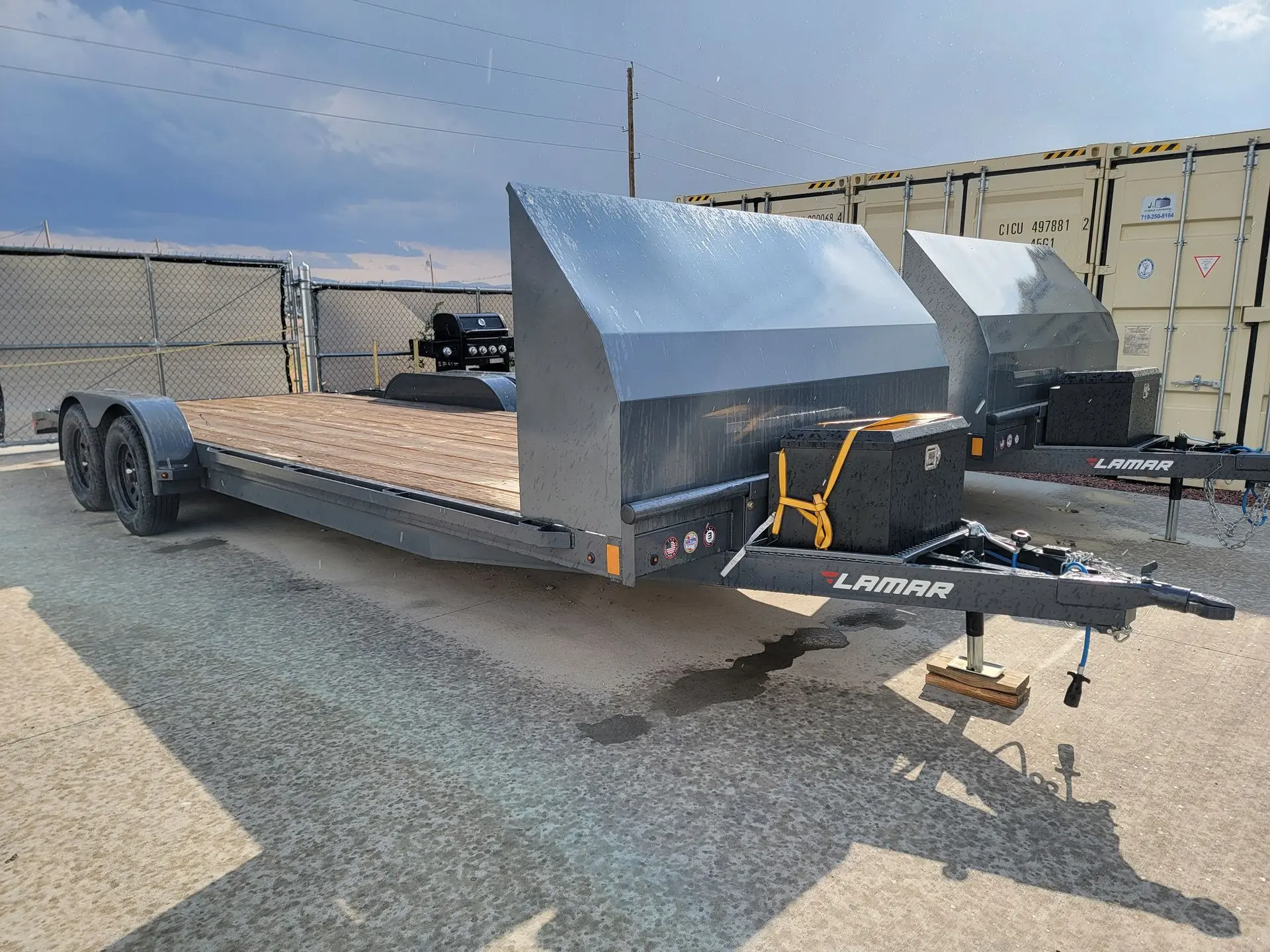
Flat bed Car Hauler with protective shield for rent
22ft Flat Bed Car Hauler (7k GVWR)

$25/Hour |  $125/Day | $750/Week

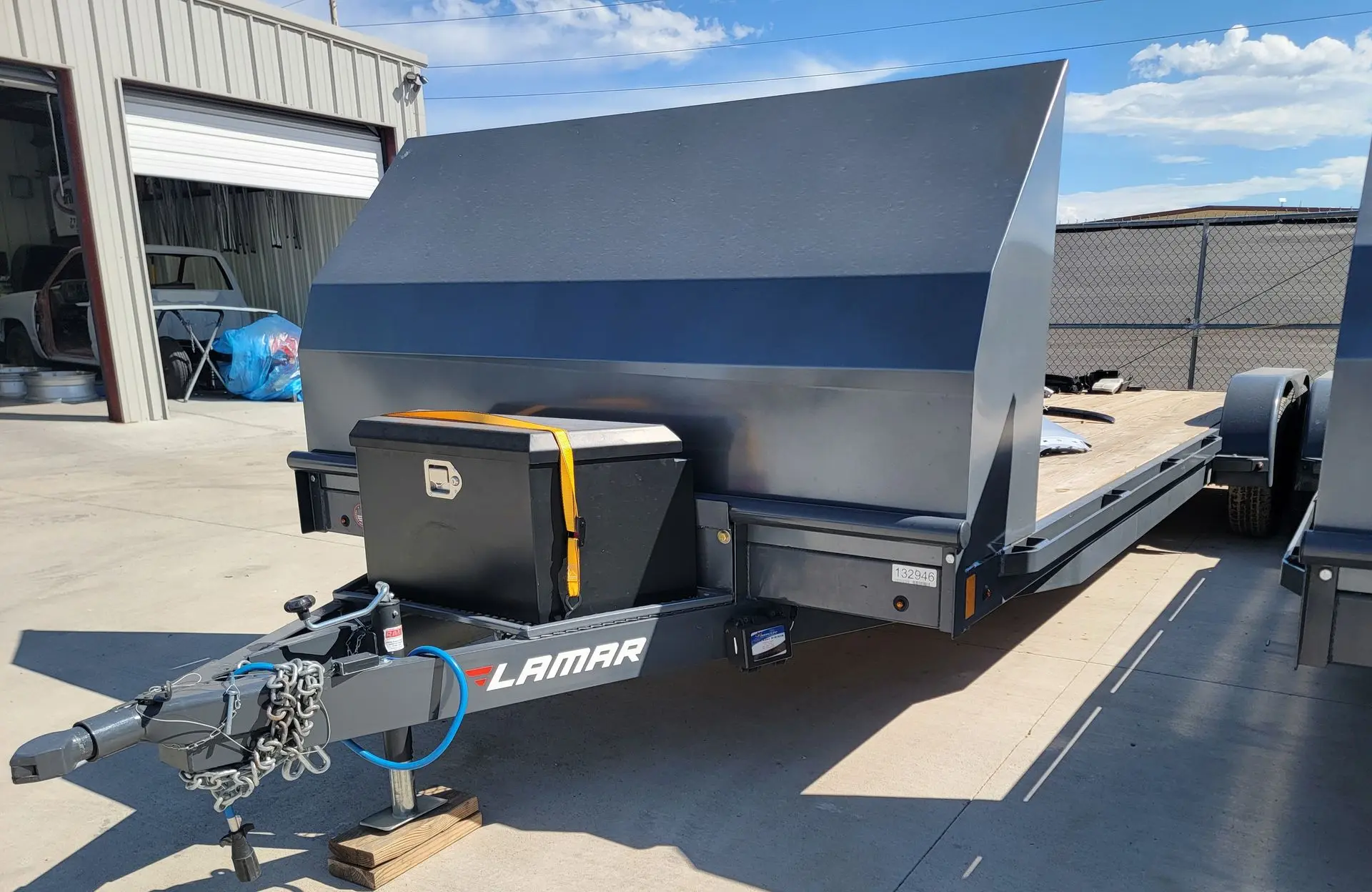
Car Hauler Trailer for rent in Pueblo West
22ft Flat Bed Car Hauler (7k GVWR) 

$25/Hour | $125/Day | $750/Week

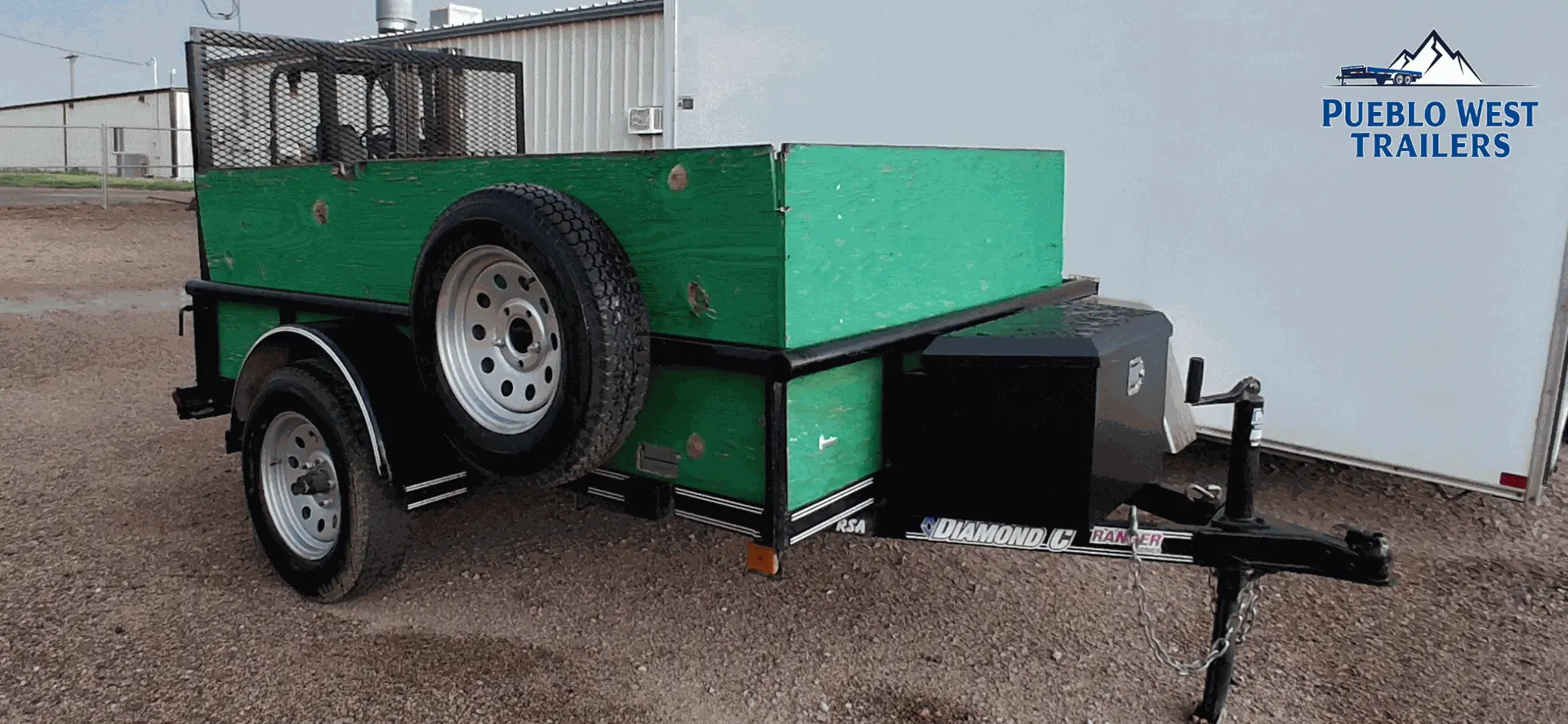
Utility Trailer for rent in Pueblo West
5ft X 8ft Utility Trailer

$75/Day | $450/Week 

Renting a Trailer is Easy with Pueblo West Trailers

Schedule and pay for your trailer rental online. Pickup your rental trailer at your scheduled time. Return the trailer and accessories.

 1. Rent

Rent a Trailer Online or by Text

Pay for Your Trailer Rental

Sign Trailer Rental Agreement

 2. Hitch

Use Your Unique Code to Enter the Lot

Unlock and Attach Your Rented Trailer

Lock the Lot When Exiting

 3. Return

Unlock the Lot

Return the Trailer and Accessories

Lock the Lot and Leave a Review!

Trailering how-to guide

If this is your first time using a trailer, or if you are unsure of how to properly use a trailer, this guide will help you understand the basics! This guide outlines the complete process for towing a flat-bed or utility trailer, from selecting the right equipment to safely securing your load. This guide does NOT replace manufacture requirements, guidelines or information. Be sure to follow ALL manufacture information.

PHASE 1: PREPERATION & EQUIPMENT SELECTION

Before you even move your vehicle, you must ensure your equipment is rated for the load and fits correctly.

Step 1. Choose the Correct Hitch Ball

​·    Size Matters: The ball size must ​effectively match the trailer's ​coupler size. This is stamped ​on the trailer coupler (e.g., 1- ​7/8", 2", or 2-5/16").

Warning: Never use a smaller ball with a larger coupler (e.g., a 1-7/8" ball in a 2" coupler). It may feel secure when stopped, but the trailer can pop off when you hit a bump.

​·   Weight Rating: Check the weight ​rating stamped on top of the ​ball. It must exceed the Gross ​Trailer Weight (GTW) (trailer ​weight + maximum cargo ​​weight).

Step 2. Measure for the Correct "Drop" ​or "Rise" - To tow safely, your trailer ​must sit level. If it tilts up or down, ​you risk trailer sway or bottoming ​out.

  1. Measure Hitch Height: Park your vehicle on level ground. Measure from the ground to the top inside edge of your receiver tube.
  2. Measure Coupler Height: Level the trailer so the frame is parallel to the ground. Measure from the ground to the bottom of the coupler.
  3. The Formula: Hitch Height - Coupler Height = Drop Required.
    • Example: If your truck hitch is 20" high and the trailer coupler is 16" high, you need a 4" Drop ball mount.

PHASE 2: ATTACHING THE TRAILER


Step 1: Alignment

​1. Back your vehicle up slowly. Use a ​​​backup camera or a spotter if​​ ​available.

​2. Align the hitch ball directly under ​the trailer coupler.

​3. Tip: If you miss slightly, it is safer ​to pull forward and try again ​than to try and ​drag the heavy ​trailer sideways by hand, ​​which can cause back   ​​injury.

Step 2: Coupling

  1. Unlock the Coupler: Lift the locking latch on the trailer coupler to the "open" position.
  2. Lower the Trailer: Crank the trailer jack handle to lower the coupler onto the ball.
  3. Engage the Latch: Once seated, push the latch down to the "locked" position. You should feel it click or snap into place.
  4. The "Tug" Test: Before fully retracting the jack, crank it up slightly. If the back of your truck rises with the trailer, the connection is solid. If the coupler pops off, it wasn't seated properly.
  5. Pin It: Insert the safety pin or lock through the latch hole to prevent it from vibrating open during transit.

Step 3: Safety Chains (The "X" Pattern)

  • Cross the safety chains under the coupler to form an "X" or cradle.
  • Why? If the hitch fails, the crossed chains will catch the trailer tongue, preventing it from digging into the pavement and catapulting the trailer.
  • Connect the hooks to the vehicle's receiver loops (not the bumper).

Step 4: Electrical & Breakaway

  • Plug in the lights: Connect the 4-way or 7-way plug. Use a small amount of dielectric grease on the pins to prevent corrosion.
  • Breakaway Cable (if equipped): Connect this separate thin cable to the vehicle frame. Do not wrap it around the safety chains. If the trailer disconnects, this cable pulls a pin that activates the trailer's emergency brakes.

PHASE 3: PROPERLY LOADING THE TRAILER

Improper loading is the #1 cause of dangerous trailer sway.

1. The 60/40 Rule

  • Place 60% of the cargo weight in the front half of the trailer (ahead of the axle).
  • Place 40% of the cargo weight in the rear half.
  • Visual Check: The trailer tongue should press down on your truck's hitch. If the trailer tongue is lifting up (making the truck rear rise), you have too much weight in the back. This is extremely dangerous.

2. Center of Gravity

  • Keep the load centered left-to-right. An unbalanced load causes tire blowouts and flipping.
  • Keep heavy items as low to the floor as possible.

PHASE 4: SECURING THE LOAD

Using ratchet straps correctly is vital.

How to Use a Ratchet Strap:

  1. Inspect: Check straps for fraying or cuts. Do not use if damaged.
  2. Thread: Feed the webbing through the bottom of the center spool and pull it back out the top.
  3. Remove Slack: Pull the free end of the strap until it is tight against the cargo before you start ratcheting.
  4. Ratchet: Crank the handle until the strap is extremely taut.
  5. Lock: Close the ratchet handle completely (flat against the strap) to engage the safety lock.
  6. Secure Excess: Tie off the loose end of the strap so it doesn't flap in the wind, which can fray the strap or damage paint.

For Vehicles:

  • Use axle straps or wheel nets. Do not attach straps to the vehicle's suspension or body, as the vehicle's suspension will compress and rebound over bumps, causing the straps to loosen.

PHASE 5: “THE CIRCLE OF SAFETY" (Pre-Trip Check)

Walk around the entire setup before driving.

  1. Lights: Have a helper press the brakes and turn signals while you check the back.
    • Troubleshooting: If lights act weird (flickering, wrong light flashing), it is almost always a ground wire issue. Check that the white wire is securely grounded to the metal frame on both the truck and trailer.
  2. Coupler: Is the pin inserted?
  3. Chains: Are they crossed and secure?
  4. Jack: Is the trailer jack fully raised (or removed) and locked so it doesn't hit the ground?
  5. Tires: Check air pressure on cold tires. Trailer tires require higher pressure (often 50–80 psi) than car tires. Under-inflation causes blowouts.
  6. Lug Nuts: Retorque aluminum wheels after the first 50 miles of towing.

Stopping Requirement: Stop after the first 10–15 miles to re-check your load straps. Cargo often "settles" and loosens the straps after the first few bumps.